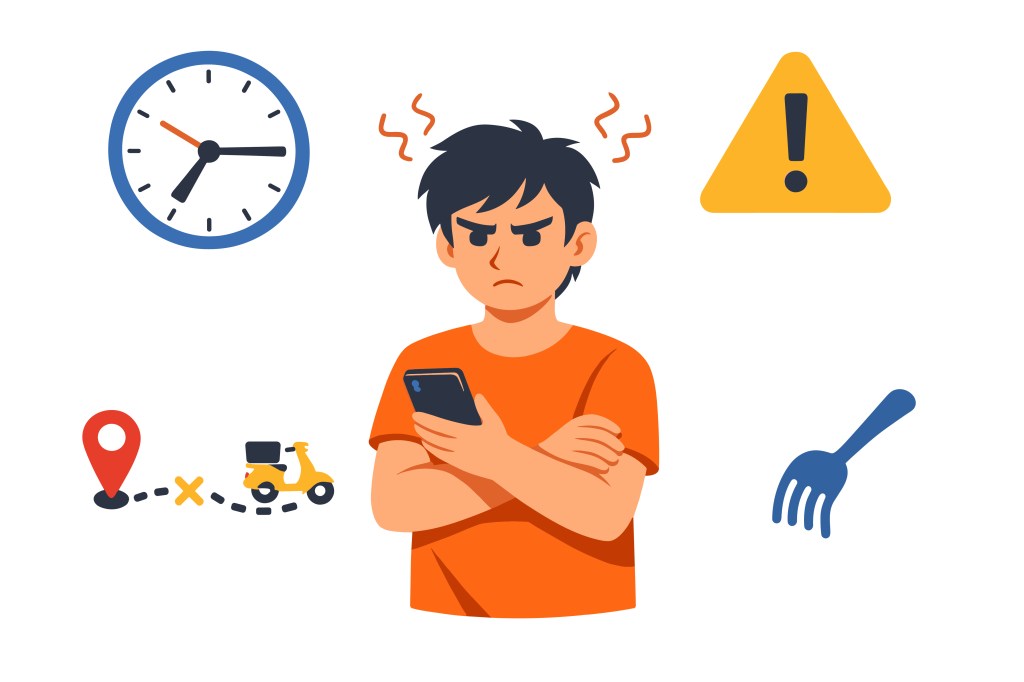
Kent County restaurant owners: if DoorDash, Grubhub, or Uber Eats is listing your restaurant without your permission, you may have real legal leverage — and you may not have to pay out of pocket to use it.
It usually starts with a phone call from an angry customer.
They ordered through an app. The food arrived cold, forty minutes late, and it wasn’t what they thought they were paying for. Or the item they ordered has been off your menu since last spring. Or they were charged $19 for a sandwich you sell for $13. They don’t blame the app. They blame you — because as far as they can tell, you chose to be on that platform.
But you never signed anything. Nobody asked. Somewhere along the way, a delivery platform simply built a page for your restaurant: your name, your logo, photos of your dining room, a menu scraped from who-knows-where, and prices you never set. To anyone scrolling their phone in Grand Rapids or Kentwood or Rockford, it looks like a partnership. It looks like you want them ordering this way.
What it actually costs you
Restaurant owners across Kent County describe the same pattern:
- Your reputation takes the hit for someone else’s service. Every late delivery, every wrong order, every soggy container becomes a one-star review with your name on it.
- Your prices get distorted. Inflated menu pricing makes you look expensive to customers who have no idea a third party added the markup.
- Your customers get pulled away from your own channels. Orders that would have come through your phone line, your website, or your front door get intercepted — often at a worse margin, sometimes at no margin at all.
- Your brand gets used without payment or permission. Your trademarks, your logo, your photographs, your goodwill. Built over years. Borrowed for free.
- Your kitchen gets whipsawed. Orders arrive for items you no longer make, at prices you didn’t set, with drivers you’ve never met walking into your lobby.
And your customers lose too. They pay more than they should, get an experience you’d never have signed off on, and walk away thinking less of a restaurant that did absolutely nothing wrong.
This is not just frustrating. In Michigan, it may be unlawful.
Here is what a lot of restaurant owners don’t know: Michigan has specific statutory protections that address exactly this conduct. They are not vague. They are not buried in general fraud law. The Legislature addressed this problem directly.
Those protections can carry real consequences for a platform that ignores them, including:
- Statutory damages — meaning a restaurant may be entitled to recover a minimum amount set by law, and in some circumstances punitive damages on top of it.
- Attorney fees paid by the platform — Michigan law may require the offending delivery service to pay a prevailing restaurant’s reasonable attorney fees. That changes the economics entirely. It means a single independent restaurant doesn’t have to fund a fight against a multibillion-dollar platform out of its own thin margins.
That last point matters most. These companies count on the assumption that a neighborhood restaurant will never find it worthwhile to push back. Michigan law was written to change that math.
If this is happening to you, let’s talk.
I’m evaluating these claims for restaurants in Grand Rapids, Wyoming, Kentwood, Grandville, East Grand Rapids, Ada, Rockford, Lowell, and throughout Kent County — independents, small groups, and family operations alike.
If you have found your restaurant listed on a delivery platform you never authorized, or you’re fielding complaints about an app you never joined, I’d like to hear about it. An initial conversation costs you nothing, and it will tell you quickly whether you have something worth pursuing.
Bring what you have: screenshots of the listing, examples of wrong menu items or inflated prices, any customer complaints or reviews tied to app orders, and any correspondence you’ve had with the platform. If you don’t have all of that, come anyway. We’ll sort it out together.
This post is general information about Michigan law and is not legal advice. Reading it does not create an attorney-client relationship. Every situation is different, and legal claims are subject to deadlines — if you think this applies to your restaurant, don’t wait to ask.